Bald Eagle Drawing for Beginners: How to Sketch a Majestic Perched Eagle
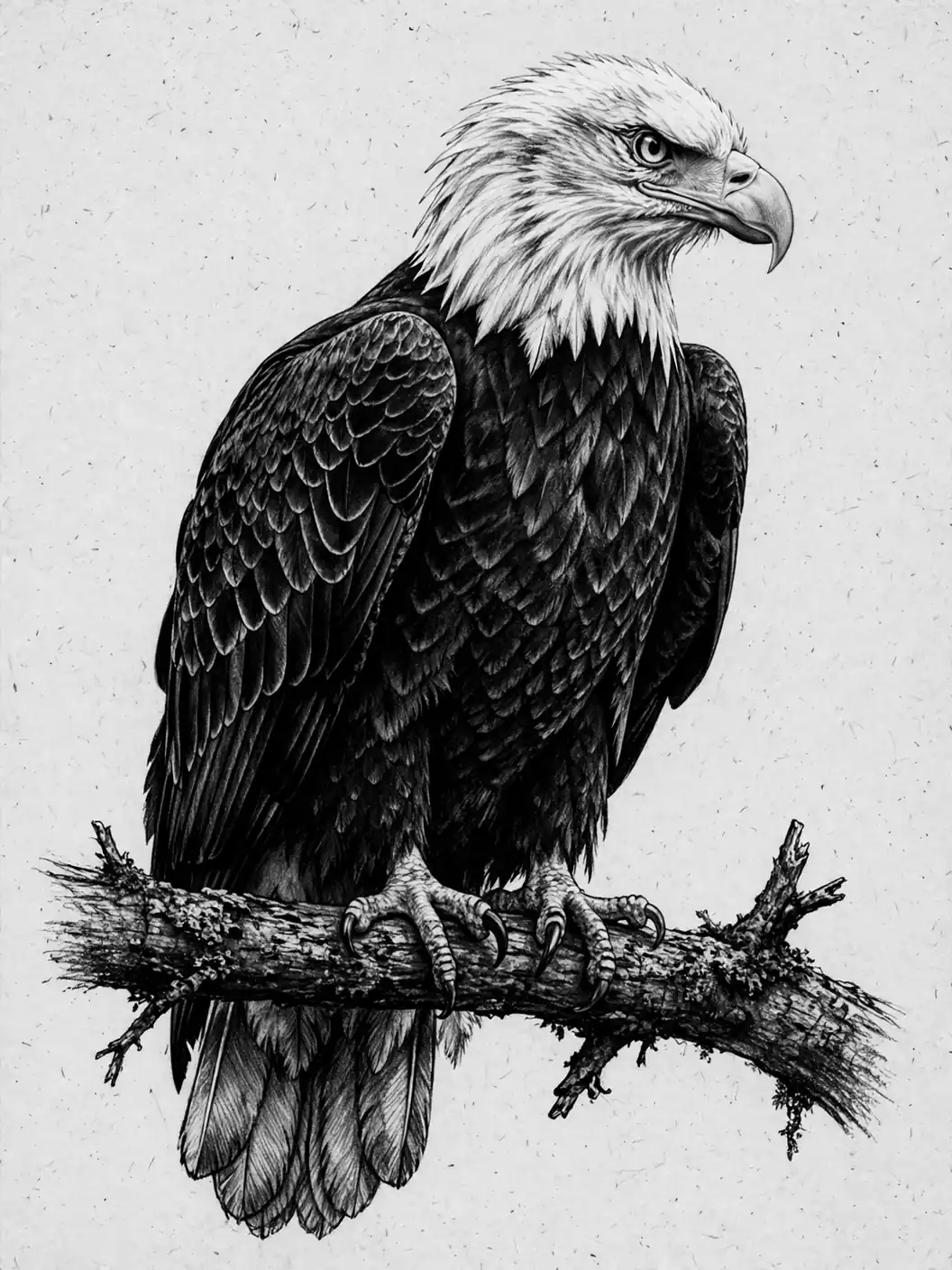
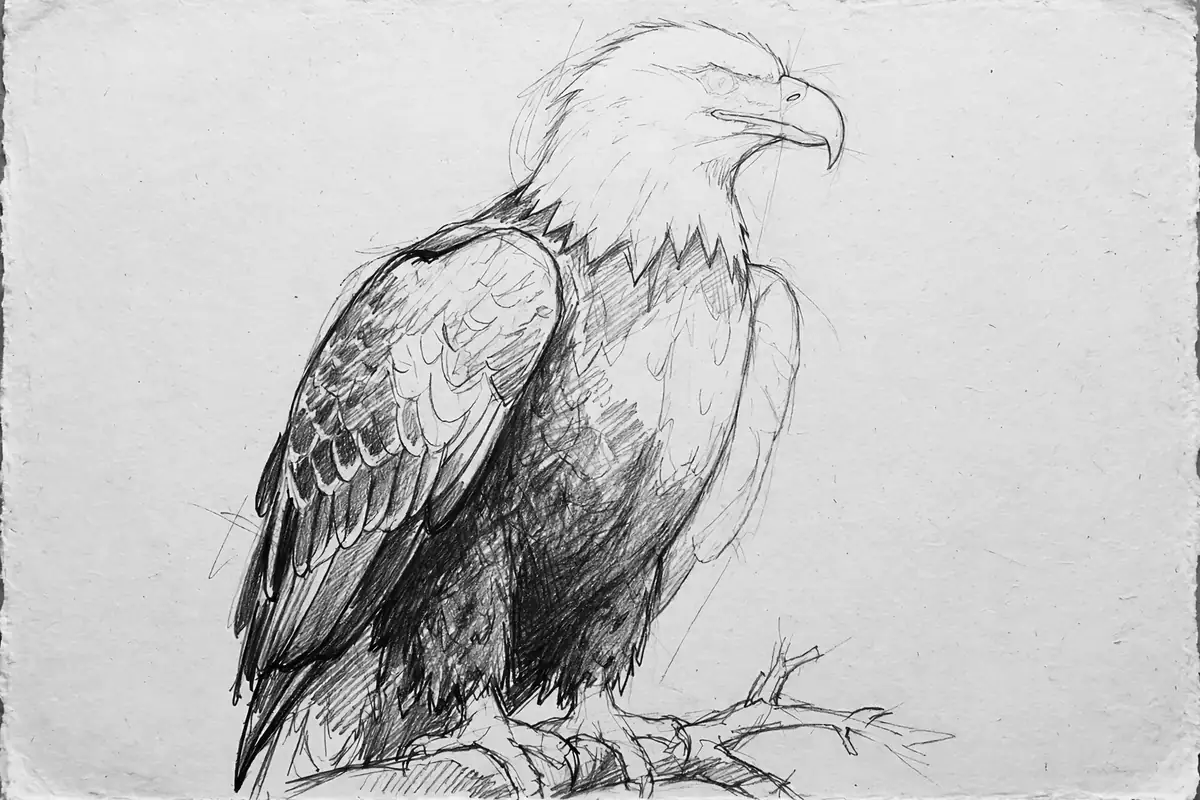
A strong bald eagle drawing is really a study in contrast. The head stays bright, the body goes deep and dark, and that difference makes the bird look powerful before you add fine detail.
This guide breaks the eagle into simple shapes first, then builds the beak, eye, and feathers in order. Keep early lines pale and save your darkest pencil for last.
What You Need
- HB pencil — for the first faint, erasable lines.
- 2B pencil — for cleaner outlines and soft tone.
- 4B pencil — for dark shading on body and wings.
- 6B pencil — for deepest shadows, eye, and talons.
- Standard eraser — for clearing guide lines.
- Kneaded eraser — for lifting highlights on the white head.
- Sharpener — a fine point matters for edges.
- Smooth drawing paper — for even, clean layers.
- Blending stump — for smoothing body shading.
- Reference photo — one clear side view to check proportions.
How to Draw a Bald Eagle Step by Step
Step 1: Place the perch and body mass
Draw a diagonal branch low on the page, then sit a large upright oval above it for the body, chest forward and back sloping toward the tail. Make this mass broader than you first think — it gives the eagle its weight.
Step 2: Add the head shape
Sketch a rounded head on top of the body, wider at the back and narrower toward the face. Leave a jagged lower edge where white head feathers meet the dark neck. Get the size right now — a small head makes the bird look weak.
Step 3: Mark the tail, legs, and wing
Below the branch, add a fan of long shapes for the tail. Place two short legs above the branch, then draw one long curved shape down the back for the folded wing.
Step 4: Shape the hooked beak
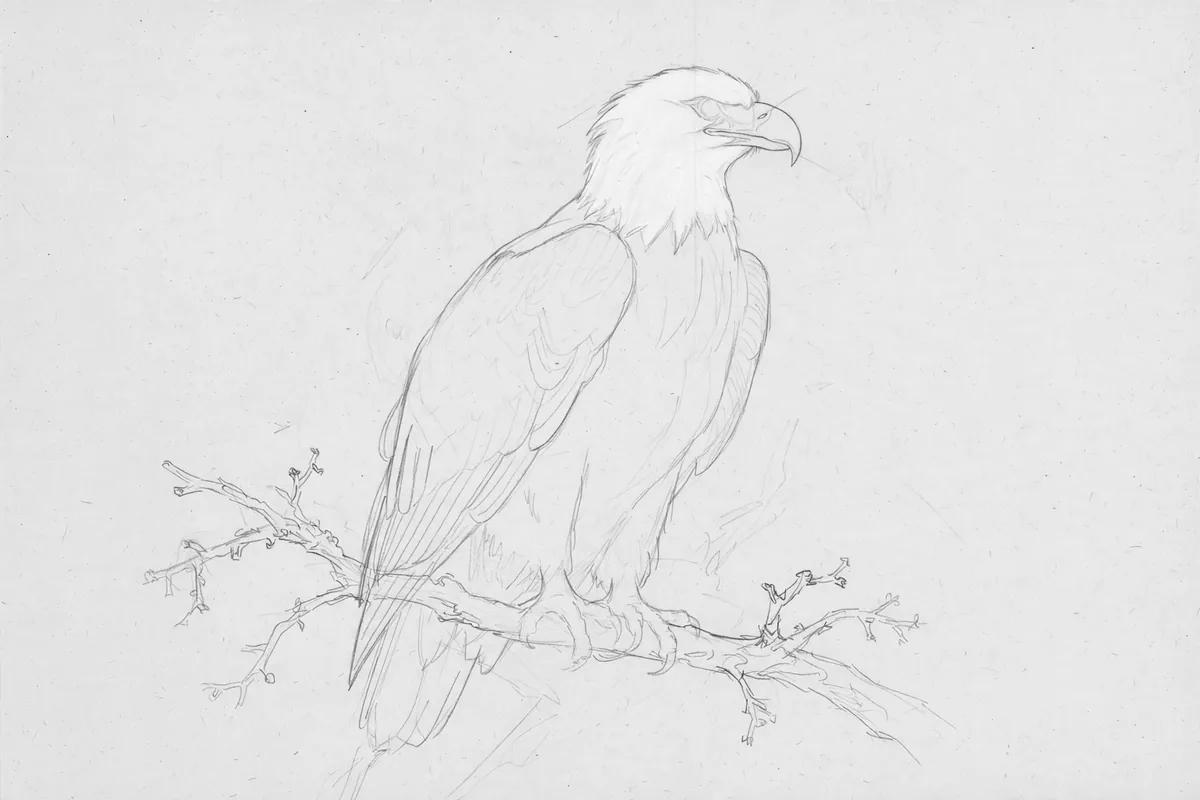
Draw a beak that starts wide, narrows, then hooks sharply down. In life it is yellow, but in graphite render it with smooth mid-grey tones and a darker hook. Keep the upper edge firm and underside lighter, so it feels hard and curved.
Step 5: Place the fierce eye and brow
Set the eye under a heavy brow line, a little more than halfway up the head. That brow creates the fierce stare. Draw a dark round eye with your 6B pencil, leave a tiny white highlight, and add shadow beneath the brow.
Step 6: Draw the white head feathers
Add short, pointed feathers across the head and neck, pointing back and down. In pencil, white does not mean blank: leave most of the head as clean paper, suggest feathers with pale grey strokes, and let the dark body make the head read as white by contrast.
Step 7: Layer the folded wing feathers
Work down the wing in overlapping rows, like roof tiles. Start with larger rounded feathers at the top, then longer, narrower ones below. Keep each row slightly darker than the one above, using short curved strokes.
Step 8: Shade the dark body and tail
Fill the chest, belly, and tail with your 4B pencil in even layers, building a rich dark gradually. Keep tail feathers a touch lighter, with clear separations, so the pale head stays framed by darkness.
Step 9: Add the talons gripping the branch
Draw thick toes wrapping over the branch, ending in long curved talons that bite into the wood. Add texture to the feet, darken each claw with 6B, and place shadow where feet meet bark.
Step 10: Finish the final values
Compare your lightest and darkest areas. Deepen wing shadows and the space under the brow, clean head highlights with a kneaded eraser, and sharpen a few neck feather edges. Add rough bark texture, then stop.
Common Mistakes to Avoid
- Shading the white head too dark. If the head turns mid-grey, the famous contrast disappears. Keep it mostly clean paper with only light feather marks.
- Making the beak too small or straight. A bald eagle’s beak is large and hooks down hard. A timid beak makes the bird look like another species.
- Drawing wing feathers as straight lines. Real feathers overlap in curved rows. Straight, even lines flatten the wing and remove its layered depth.
Take your time with the contrast and this eagle will reward you. The second attempt is usually bolder, because your hand already trusts how dark the body must go against that bright head.