Snow Leopard Drawing for Beginners: Draw a Resting Big Cat on a Rock
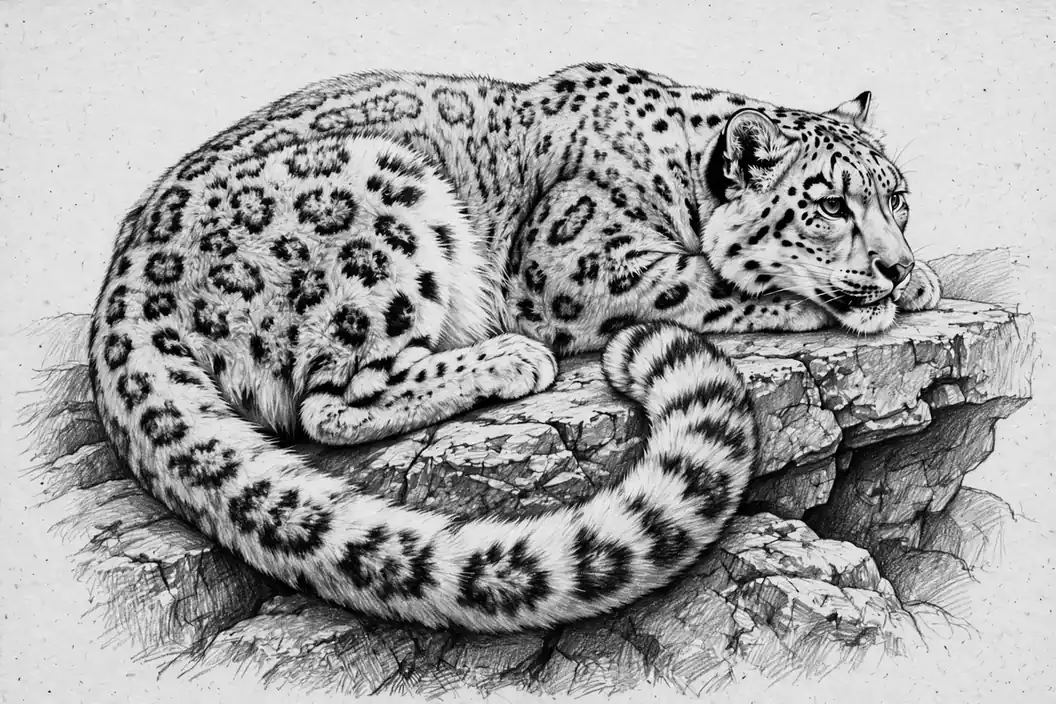
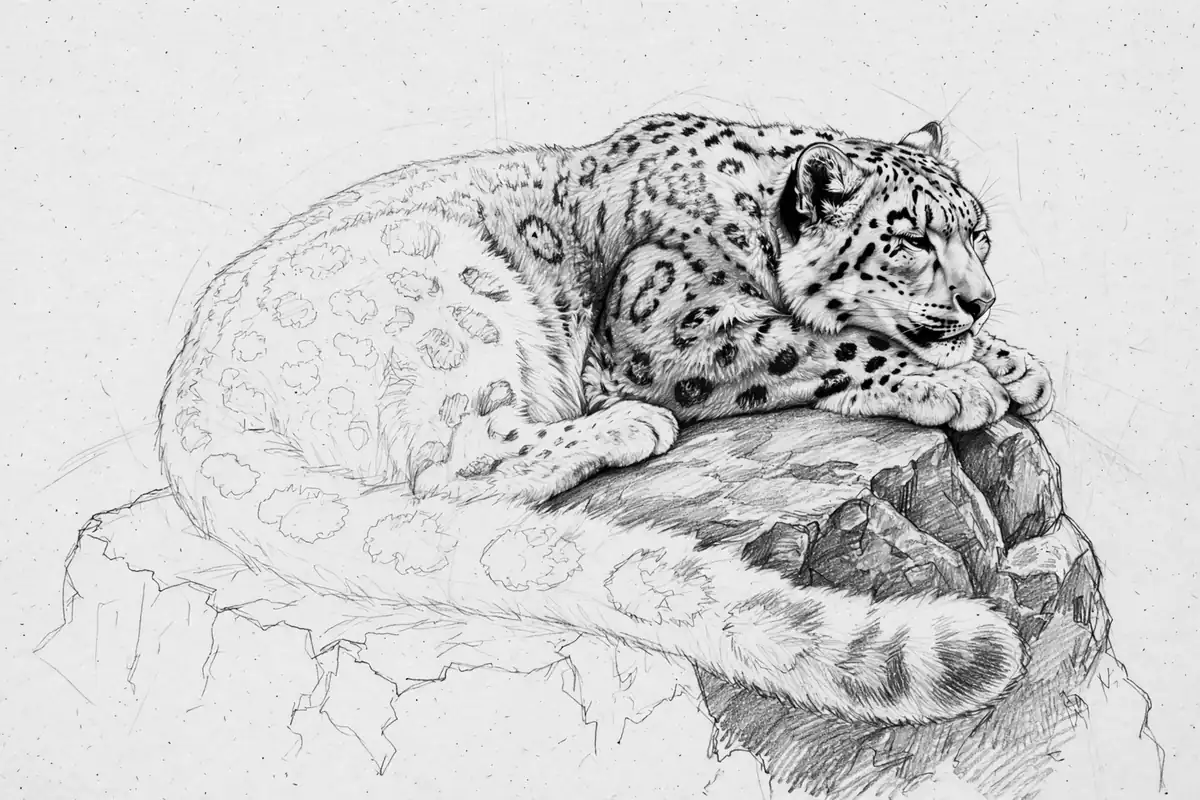
A snow leopard drawing looks hard because of the thick fur and spots, but a resting pose makes it easier. The body settles into one long, low shape on the rock, and the very long tail does much of the work for you.
Build it slowly with light lines. Save darkest marks for spots and shadows, and keep the coat pale.
What You Need
- HB pencil — for the first faint, changeable outline.
- 2B pencil — for main lines and soft fur layers.
- 4B pencil — for deeper shading and rock cracks.
- 6B pencil — for darkest rosettes, nose, and shadows.
- Regular eraser — for removing unneeded guide lines.
- Kneaded eraser — for lifting highlights on the pale coat.
- Sharpener — for a fine point on spots and details.
- Smooth drawing paper — for clean fur strokes.
- Blending stump — for softening shading gently.
- Reference photo — for checking spots, ears, and tail.
How to Draw a Snow Leopard Step by Step
Step 1: Block in the long body on the rock
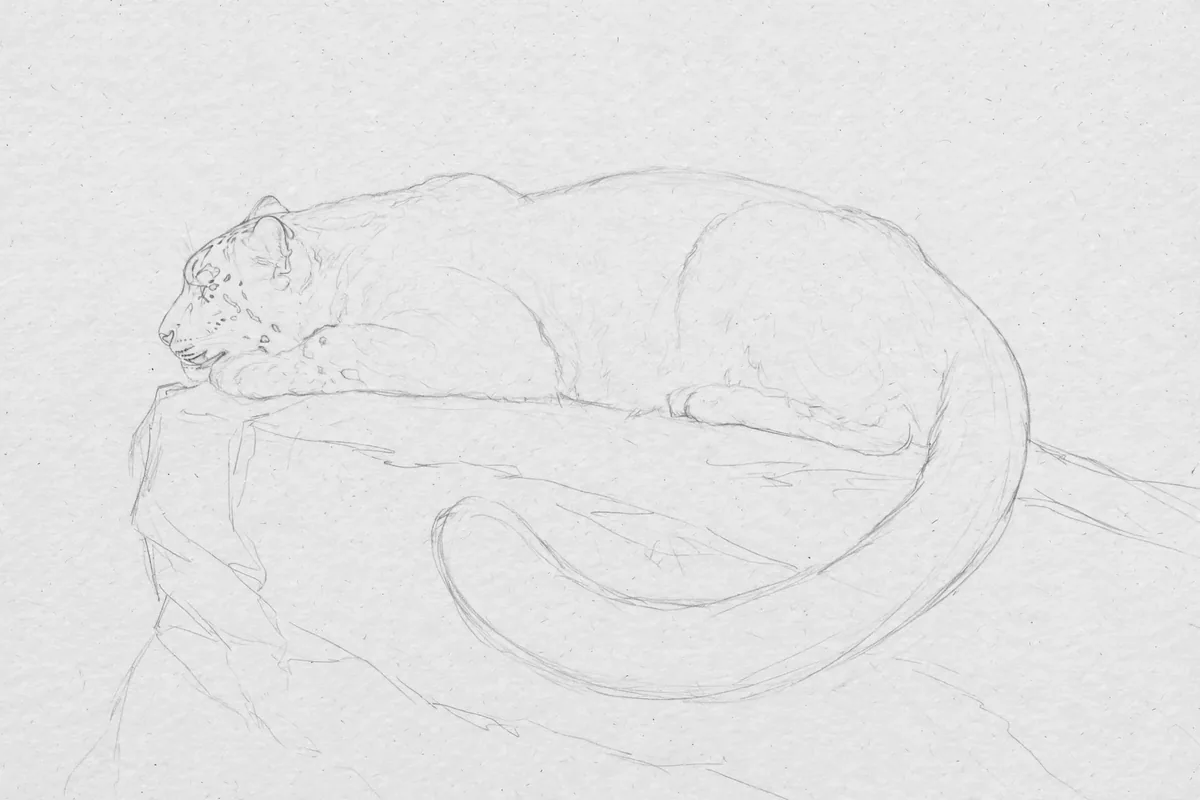
Sketch a wide, low oval for the body lying flat, with a flatter, uneven shape underneath for the rock. Keep both loose. The body should feel heavy and relaxed, not arched. Leave room for head and tail at each end.
Step 2: Place the head, ears, and front legs
Add a rounded head resting low near the front paws, slightly turned. Snow leopards have small, rounded ears set wide apart, so draw two short curves, not tall points. Sketch front legs folded forward, with big paws that look slightly oversized from thick fur.
Step 3: Draw the very long, thick tail
Draw the tail from the back of the body, curling around the rock. Make it almost as long as the body and much thicker than you first think. Let it follow the rock’s edge and soften at the tip. This tail clearly marks it as a snow leopard.
Step 4: Refine the face and outline
Add a short muzzle, small nose, and calm, half-open eyes. Mark the mouth line and tiny whisker dots. Clean up wobbly guide lines around the body, but keep the outer edge slightly soft and furry rather than perfectly smooth.
Step 5: Map the rosette spots before shading
Lightly mark the spots first. On the back and sides, draw larger broken rosettes — loose rings of small dashes with a paler middle. On head and legs, use smaller solid spots. Keep spacing uneven and follow the body’s curve, so the pattern wraps around.
Step 6: Lay down the first pale fur shading
With the 2B pencil, add a very light layer across the coat using short strokes that follow how fur grows. Keep it pale and build slowly. Darken only under the belly and chin, and where the body presses into the rock.
Step 7: Build fur texture and deepen the spots
Add stronger strokes along the back, shoulders, and tail. Fill the rosettes with 4B and 6B, keeping edges broken and fuzzy, not solid black circles. Blend pale areas lightly, then add fresh strokes on top so the fur still feels thick and fluffy.
Step 8: Shade the rock and ground the animal
Use longer, straighter strokes and small cracks for the hard rock, contrasting with soft fur. Add a darker shadow band under the body, paws, and tail. That contact shadow stops the leopard floating above the stone.
Step 9: Strengthen the face, paws, and tail tip
Darken the nose, mouth line, and face spots with a sharp 6B. Add fur strokes around the big front paws and soft toe divisions, without hard claws on a resting cat. Keep the tail thick, pale, and clearly spotted near its tip.
Step 10: Add final contrast and check the pale coat
Compare your tones. The darkest areas should be the rosettes, the shadow under the body, and deep rock cracks. If the coat looks too grey, lift it gently with the kneaded eraser. Add highlights on the head and back, then stop.
Common Mistakes to Avoid
- Making spots all the same size. Use big broken rosettes on the body, solid spots only on head and legs.
- Shading the coat too dark. Stay pale — pressing hard early turns fur grey and kills spot contrast.
- Drawing the tail too thin or short. Keep it very long, thick, and fluffy, or it reads as a regular leopard.
Take your time with the spots and pale shading, and this resting snow leopard will reward your patience.