
Cheeseburger Recipe for Beginners: Juicy, Melty and Ready in 30 Minutes
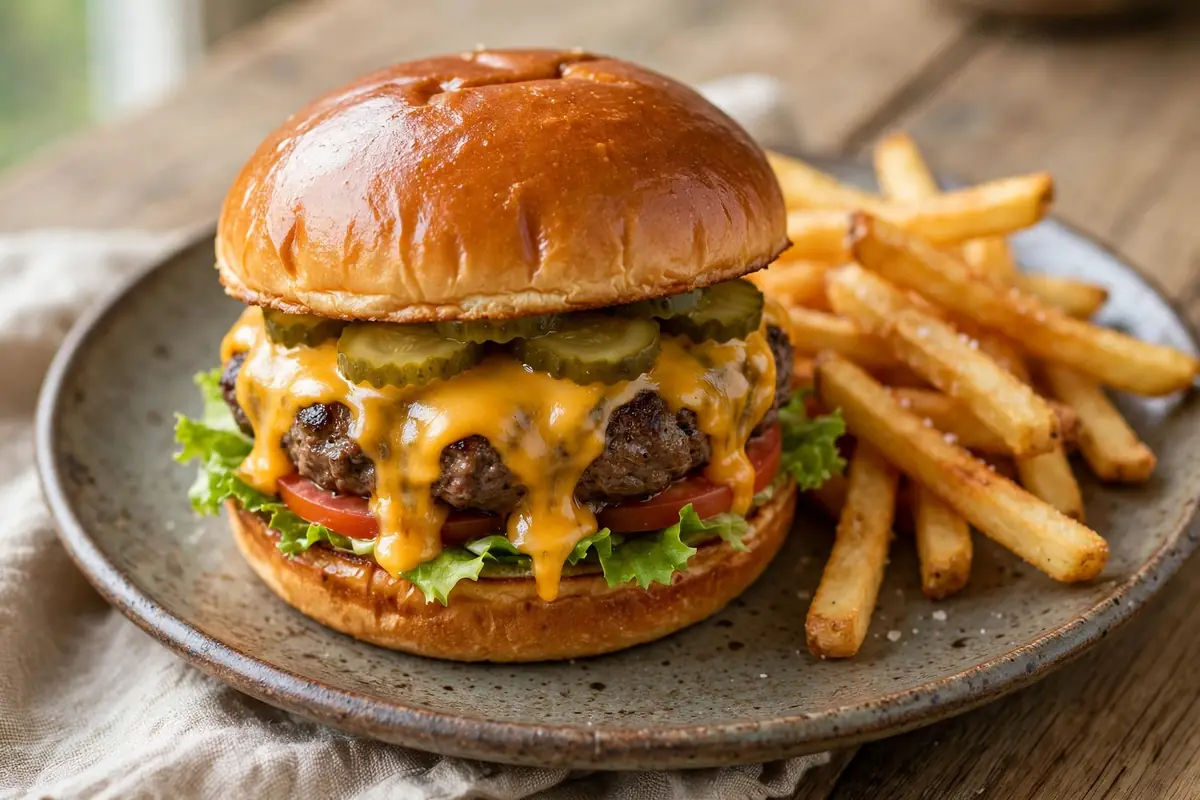
A good cheeseburger recipe is mostly about restraint. You do not need a long spice list or a special sauce with twelve ingredients. You need decent beef, a hot pan, salt at the right moment, cheese at the right moment, and a toasted, buttered bun. Get those right and the burger takes care of itself.
This version makes four classic cheeseburgers in a normal home kitchen, skillet or grill, in about half an hour.
What You Need
- 800 g (about 1¾ lb) ground beef, 80/20 — the fat keeps it juicy; leaner beef dries out.
- 4 slices American cheese or mild cheddar — American melts smoothest.
- 4 soft burger buns — potato or brioche toast nicely.
- 1 tsp fine salt — for the patties, just before cooking.
- ½ tsp black pepper — freshly ground if you have it.
- ½ tsp garlic powder — quiet background flavour.
- 1 tbsp neutral oil or butter — for the pan and for toasting the buns.
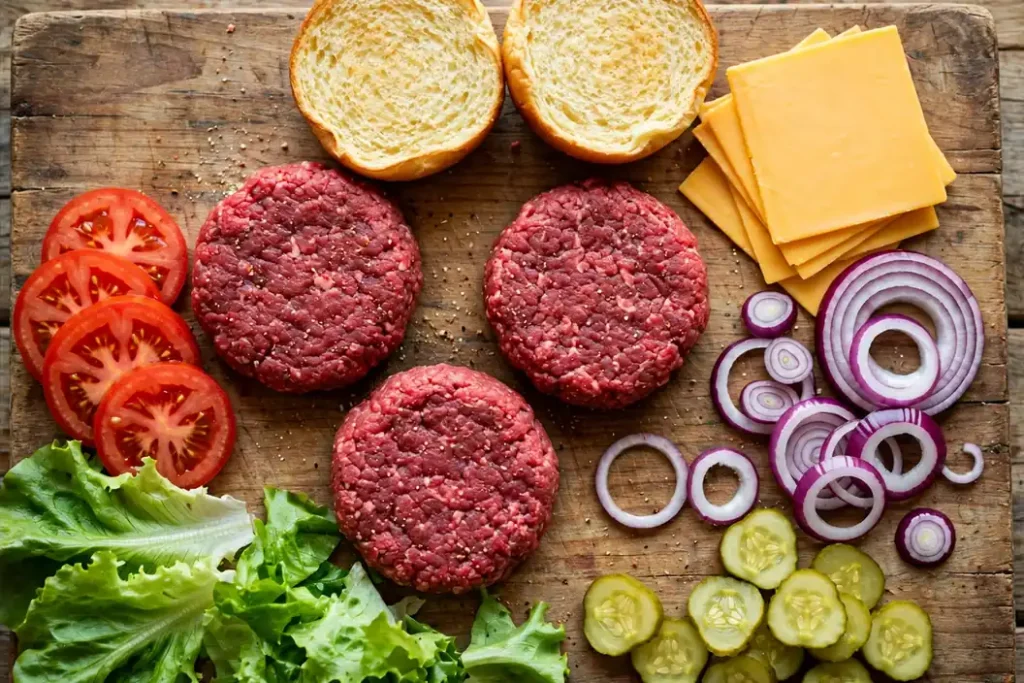
- Lettuce, 1 large tomato, pickles and sliced onion — washed and sliced.
- Ketchup, mustard or mayo — whichever your table actually likes.
- A heavy skillet or grill — cast iron gives the best crust.
- A wide, sturdy spatula — for one confident flip.
- Baking paper and a plate — for resting the formed patties.
How to Make This Cheeseburger Step by Step
Step 1: Divide the beef without working it
Tip the cold beef into a bowl and divide it into four portions of roughly 200 g each. Handle it as little as you can. Every squeeze warms the fat and packs the meat tighter, and tightly packed meat cooks up dense.
Step 2: Form loose patties, wider than the buns
Shape each portion into a patty about 2 cm (¾ inch) thick and a little wider than your buns, because patties shrink and puff up as they cook. Press a shallow thumb dent into the centre of each one. That dent stops the middle ballooning into a dome, so the burger sits flat.
Step 3: Chill the patties and set up your toppings
Lay the patties on the lined plate and chill them for at least 15 minutes. Cold patties hold together better and sear instead of steaming. While they chill, wash and dry the lettuce, slice the tomato and onion, and lay out the cheese and sauces — everything ready before the pan gets hot.
Step 4: Season the outside, right before cooking
Pat the patties dry with kitchen paper and season both sides generously with the salt, pepper and garlic powder. Seasoning now, on the outside only, gives you a flavourful crust while the inside stays beefy and juicy.
Step 5: Sear the first side and leave it alone
Heat your skillet over medium-high heat, add a thin film of oil, and lay the patties in, dent side up, with space between them. Now do nothing for 3 to 4 minutes — a deep brown crust is forming, and moving the patties will only slow that down.
Step 6: Flip once and cook the second side
Slide the spatula fully under each patty — you should feel the crust release cleanly — and flip it in one confident motion. Cook the second side for about 2 to 3 minutes. The patty should still feel slightly springy when pressed; 70°C (160°F) in the centre is the safe target if you use a thermometer.
Step 7: Add the cheese and help it melt
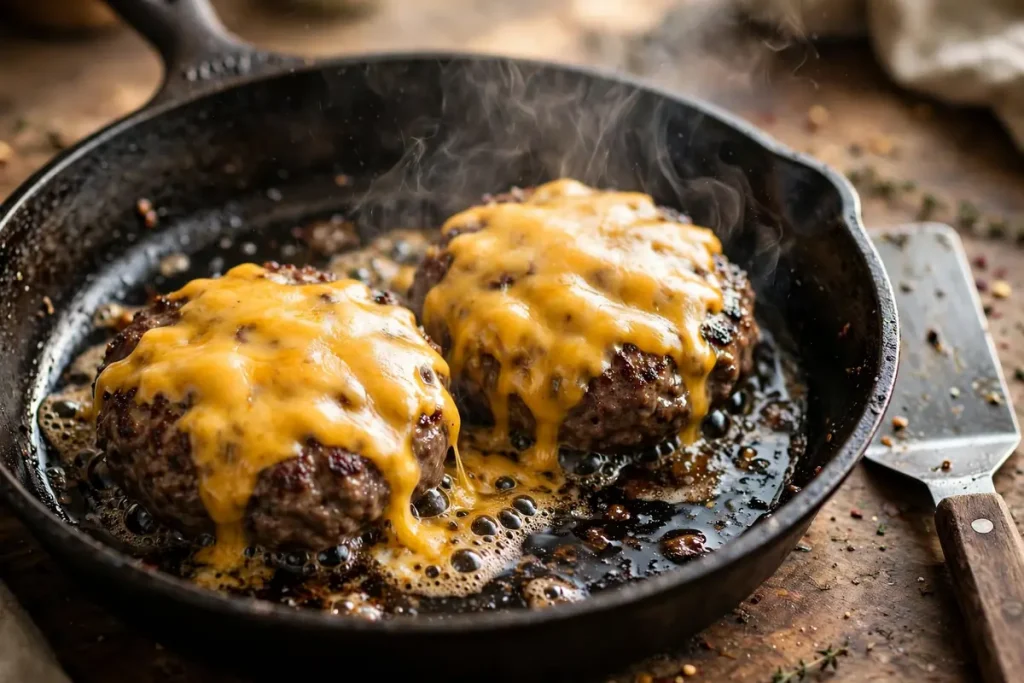
Lay a slice of cheese over each patty as soon as the second side is nearly done. Add a teaspoon of water to an empty corner of the pan and cover it with a lid for 30 to 45 seconds. The trapped steam melts the cheese down over the edges instead of leaving it a stiff square on top.
Step 8: Toast the buns in butter
Butter the cut sides of the buns and toast them face down in a clean pan for about a minute, until golden. A toasted bun is not decoration: it adds flavour and stops the juices soaking straight through the bread.
Step 9: Build the burger in a sensible order
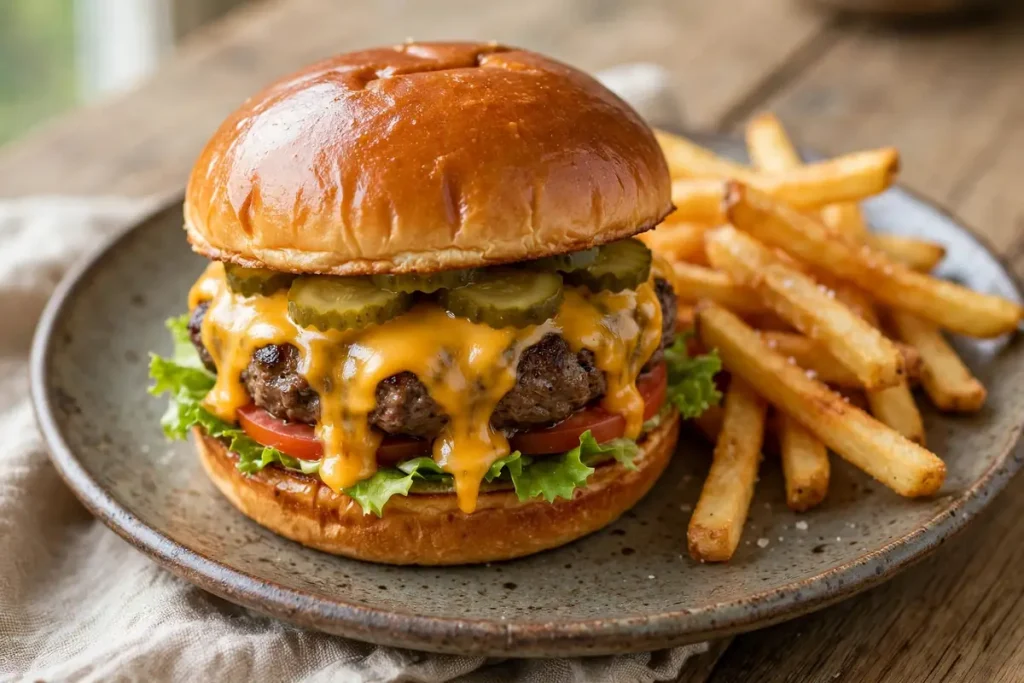
Sauce goes on both toasted bun halves. Then lettuce on the bottom bun, where it shields the bread from the hot patty. The cheesy patty goes on next, followed by tomato, onion and pickles. Cap it with the top bun and press down once, gently.
Step 10: Rest briefly, then serve straight away
Give the stacked burgers two minutes before anyone bites in. That pause lets the juices settle back through the patty instead of running down your wrists. Serve with fries, a simple salad, or nothing at all.
Common Mistakes to Avoid
- Overworking the meat. Mixing, squeezing and reshaping the beef makes patties dense and bouncy. Divide it, shape it loosely, and stop.
- Pressing the patties flat in the pan. Every hard press squeezes juice out onto the hot surface, where it is lost for good. Press once, lightly, at the start — then leave them alone.
- Getting the cheese timing wrong. Cheese added at the flip dries out, and cheese added after the pan leaves the heat never fully melts. Give it the last minute, under a lid, with steam.
Make this burger once exactly as written, then change one thing next time — a different cheese, a pickle you like better, a sauce of your own. That is how a simple recipe quietly becomes your recipe.