Falcon Drawing for Beginners: How to Sketch a Perched Bird of Prey
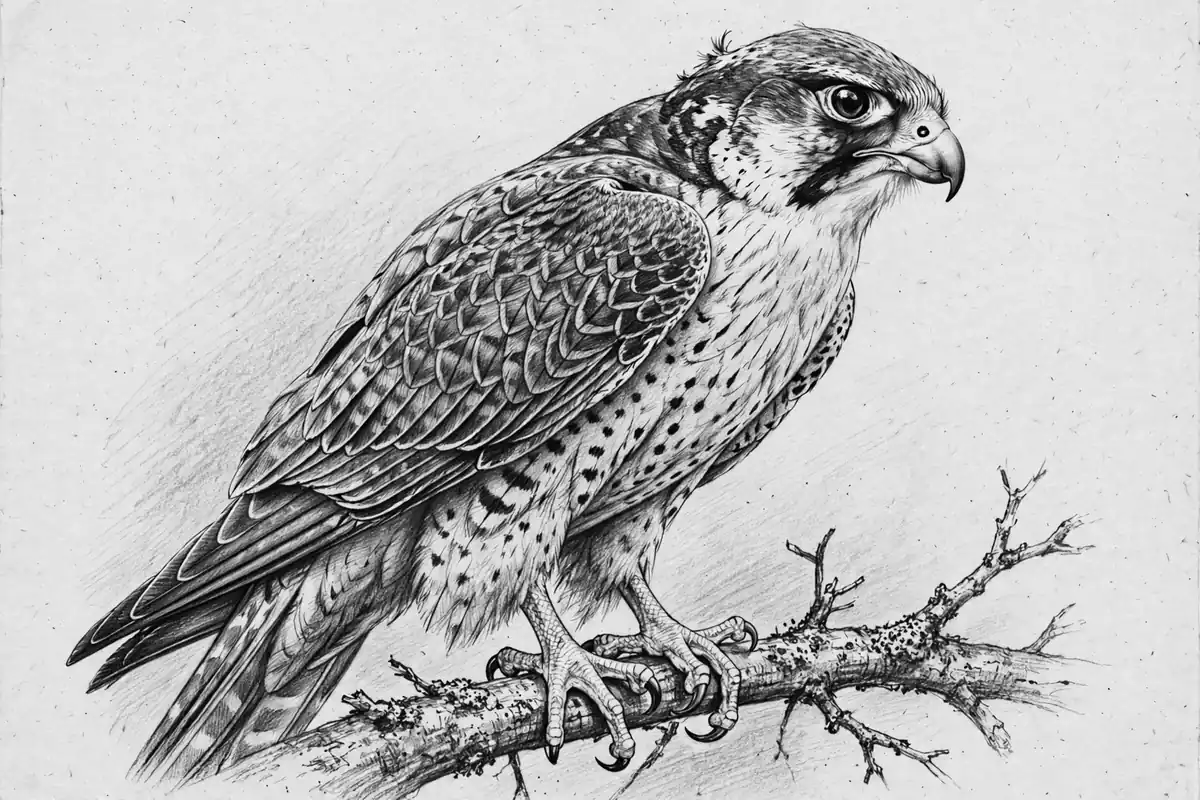
Starting a falcon drawing can feel intimidating, because falcons look sharp and precise. That hooked beak, hard stare, and layered feathers seem to demand years of practice.
They do not. A perched falcon is mostly a tilted oval, a round head, and patient shading. Get those shapes right, keep early lines light, and detail will follow.
What You Need
- HB pencil — for the first faint outline that erases cleanly.
- 2B pencil — your main pencil for lines and gentle shading.
- 4B pencil — for darker feather bands and soft shadows.
- 6B pencil — only for the eye, beak tip, and deepest tones.
- Standard eraser — for removing unwanted guide lines.
- Kneaded eraser — dab and lift to create clean highlights.
- Sharpener — a fine point helps with fine edges.
- Smooth paper — helps shading stay even.
- Blending stump — smooths chest shading cleanly.
- Reference photo — keep a clear perched falcon photo nearby.
How to Draw a Falcon Step by Step
Step 1: Block in the Body Shape
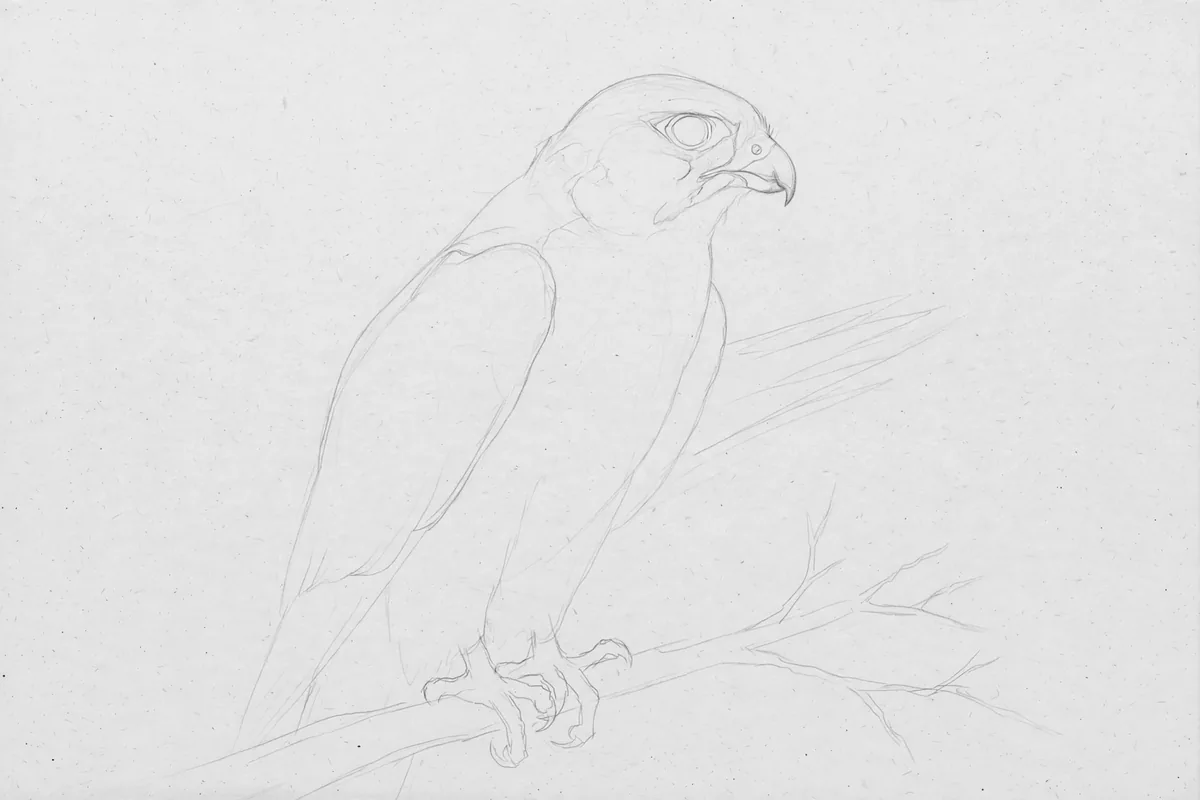
Draw a large tilted oval for the body, leaning forward like an alert bird. Add a smaller circle above for the head, overlapping the oval a little. Sketch a rough branch line underneath. Keep lines loose with your HB pencil and fix proportions now.
Step 2: Shape the Head and Hooked Beak
Refine the head, flatter on top and fuller at the cheek. From its front, draw a short beak curving down sharply at the tip — that hook makes a falcon a falcon. Add a small bump for the cere at its base, and hold the head high.
Step 3: Place the Eye and Facial Markings
Draw the eye as a bold circle high on the head, closer to the beak than you might expect. Leave a tiny white dot inside for life. Below it, lightly sketch the dark cheek stripe running downward. That mark adds instant character.
Step 4: Draw the Folded Wing
On the body’s side, draw one long folded wing sweeping from shoulder to tail, ending in a soft point. Inside it, add a few long overlapping shapes for the main flight feathers, like roof tiles tucked under each other. Keep inner lines light.
Step 5: Add Feather Patterns
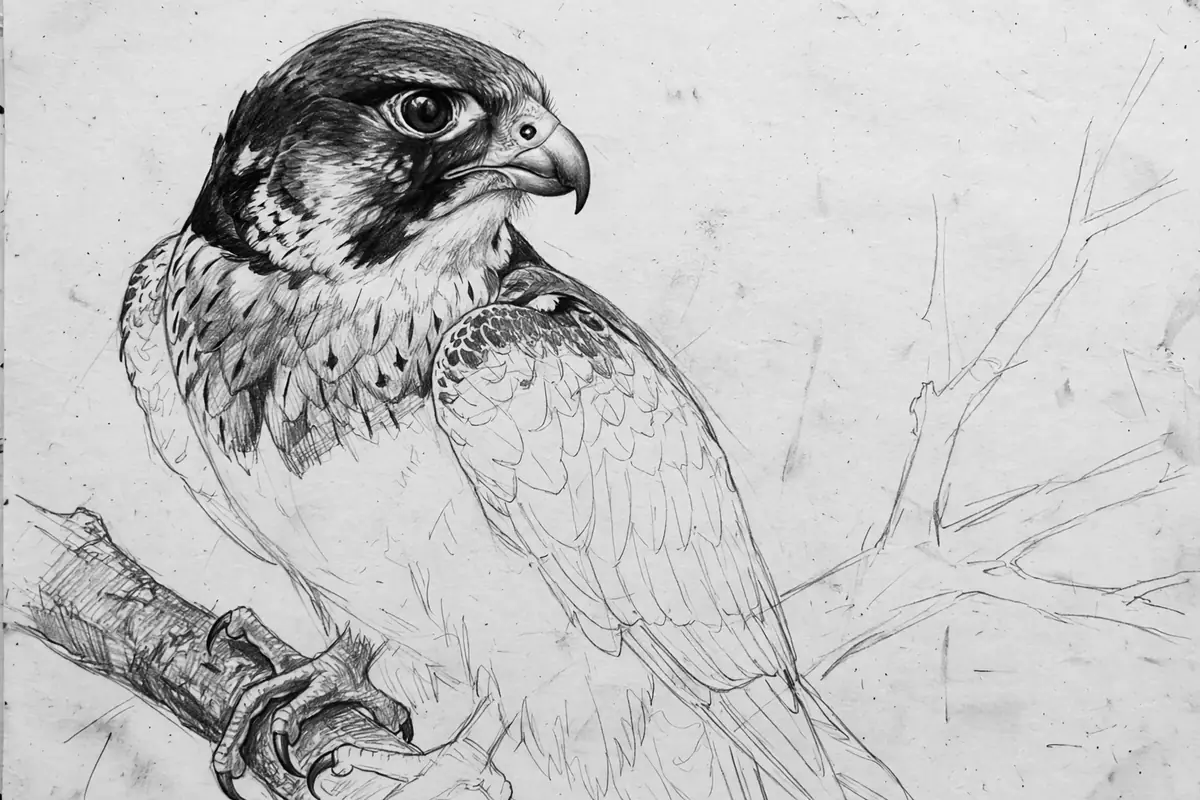
On the chest, use short, soft, broken strokes to suggest small feathers instead of hard outlines. Across the wing and back, add gentle bands and speckles, since many falcons are barred there. Vary marks slightly — nature is never perfectly even.
Step 6: Sketch the Tail and Legs
Below the wing tip, draw the tail as a neat, straight fan past the branch, with lines separating its feathers and soft bands across them. Add two short sturdy legs, keeping the feathered upper legs fluffy and lower legs bare.
Step 7: Draw the Talons and Branch
Wrap the toes around the branch, three forward and one back on each foot, each ending in a curved sharp talon. Make the branch gnarled, with bumps, cracks, and one broken twig. Darken its underside so it feels round and solid.
Step 8: Lay Down the Main Shading
With 2B and 4B pencils, pick a light direction, such as from the upper left. Shade the body’s far side, under the chest, and beneath the wing in layers following its curve. Build tone gradually, and leave the chest front and head top much lighter.
Step 9: Deepen Contrast and Feather Detail
Use the 6B for the strongest accents: eye pupil, beak tip, talons, and darkest feather bands. Sharpen the wing with a few short feather strokes. If an area looks flat, darken the shadow beside a light edge — that contrast makes feathers pop.
Step 10: Finish with Highlights and a Final Check
Lift highlights with your kneaded eraser on the eye, beak top, and chest edges. Soften harsh shading with the blending stump, leaving some wing texture. Step back: if the hooked beak, bright eye, and talons stand out, your falcon is done.
Common Mistakes to Avoid
- Making the beak too long or straight. A falcon beak is short and hooks down hard — a long beak changes the bird.
- Placing the eye too low or too small. A tiny, low eye looks sleepy, so keep it large, high, and dark.
- Outlining every feather. Hard outlines look stiff; use broken strokes and soft shading instead.
Falcons reward patience, so do not worry if your first try looks rough. Notice where the head or wing went off, then try again — the second version almost always surprises people. Keep this guide nearby and enjoy watching that fierce hunter appear.